Former CIA and NSA chief General Michael Hayden said at an event today that bombing Iran would only bolster the nation, and make it harder to stop the Islamic Republic. While still working for President Bush Hayden determined that attacking Iran would be a terrible idea. This follows on the heals of two former heads of Mossad saying that an assault on Iran could only bring more instability to the Middle East. It will be interesting to see how Congress will take these comments. In recent weeks members in Congress on both sides of the aisle have been ratcheting up the rhetoric towards Iran; on a seemingly disastrous course towards war. Most of the GOP candidates have repeatedly said that they would base their military decisions on the advice of their generals. That being said it will be interesting what response Romney, Santorum, or Gingrich will have to the Bush era generals thoughts on not attacking Iran
It is time for Washington and the citizens of the Unites States to wake up and realize that sanctions are failing to prevent Iran from building a bomb.
The latest round of sanctions were viewed in Iran as an act of war today. Iran’s finance minister, Shamseddin Hosseini, was quoted in the offical news agency IRNA as saying, “These sanctions are an economic war against us.” and “The enemies of the Islamic republic’s regime, with all their tricks, have not been able to chain the nation and now they want to chain the economy.”
The purpose of the sanctions is to weaken the Iranians and bring them to the negotiating table, not to raise tensions and bring us closer to conflict. Sanctions have only emboldened the Iranians to speed up their nuclear capabilities. The west has now made it impossible for the Iranians to halt building even if they wanted to. If Iran were to build a bomb, or be at a capacity in which they could construct one very quickly, they would no longer be kicked around by Israel and America. Recent events have shown what happens when a regime does back track on the building of a nuclear device. Gaddafi was convinced by the west to dismantle his nuclear facilities under immense international pressure; after he did he was victim to a military intervention and was executed. If Gaddafi had had a nuclear weapon there is no way NATO would have implemented a no fly zone. A bomb for Iran would mean never getting pushed around again by Israel and America.
For an even better explanation read Vali Nasr’s recent article in Bloomberg.
The head inspector of the Syrian defense ministry, Mahmoud Souleiman Hajj Hamad, has defected. In an interview with Al Jazeera he reveals several fascinating facts about the inner working of the regime. He made the decision to defect after going out and “…observing, inspecting and seeing in our own eyes that there are armed gangs among the protesters, and these gangs are killing protesters.” Aside from being in the defense ministry Hamad was also an auditor for the interior ministry. From this vantage point he was able to see the vast sums of money being transferred from the regime to the thugs killing protesters. Hamad said about $40 million had been spent on loyalist militias who’s goal is to destroy the protesters. Hamad also claims that Iran and Iraq have been giving Assad and the regime financial support. He praises the Free Syrian Army, and also claims that there are many officials who do in fact want to defect.
“I affirm to you that 80% of officials and employees in the government want to defect from this regime. They want to defect and I was one of them, but their fright about themsleves and families from a dissolute regime, this prevents them from defecting.”
What effect Mahmoud Souleiman Hajj Hamad’s defection will have on the political situation is unknown at this point. During Libya’s push to overthrow Gaddafi we saw scores of government officials defecting from the regime. These defections helped to isolate Gaddafi and his inner circle; adding to his eventual downfall. But Syria is not Libya. Most of the senior government positions are held by Alawite’s and staunch loyalists. These loyalists will lose everything if the regime falls, and would most likely be shunned by whatever government takes power after Assad. Every country involved in the “Arab Spring” has been different, and has reacted differently to internal change.
My best guess is that this will prove to be insignificant. Unlike Libya and Gaddafi, Assad still garners a lot of support with in the country. He is not universally loathed like many other authoritarian rulers ousted in the middle east. Christians, Alawites, secularists, and much of the middle class are terrified of what could happen were the regime to fall. That represents a large chunk of the population that is very invested in the longevity of Assad’s rule. Assad also has more or less been able to control the army and security forces. It does not seem likely that the army will help push him aside, as was the case in Egypt. Conversely, the regime can not win by simply going out and killing people. The opposition is only growing stronger in their resolve to see the regime disappear. There is no way that all of these people will simply go back to their houses are forget what has transpired these past months. Some form of negotiation is the only solution to the fighting. When that will actually happen is anyone’s guess. In the mean time another 5,000 civilians will likely perish.
PBS Newshour has a reported tonight about Syrian operatives and pro regime elements here in the United States. The operatives send back information on anti Assad activists, who’s families in Syria have been targeted by the feared Syrian air force intelligence the Mukhabarat. Families have been beaten and attacked, and in many cases disappeared. This comes amid calls by the Arab League for an emergency meeting to deal with the Syrian crisis.
The new “peace talks” taking place in Jordan between the Palestinians and Israelis should not be seen as a breakthrough. Instead, they should be viewed with a huge grain of salt. As reported in the BBC
“Both Israeli and Palestinian officials did nothing to raise expectations ahead of the meeting, reports the BBC’s Kevin Connolly in Jerusalem, and there was never a point in the evening where it felt that they would be exceeded.
The priority for both sides will be to avoid blame if the process cannot be restarted, he adds.”
Senior political analyst for Al Jazeera, Marwan Bishara, also iterated this point, saying that the meetings are just “talks about talks.” He goes on to say that
“The Israelis need it. It seems Abbas needs it for the time being,” he said. “Certainly the Europeans and the Americans need to give the impression that there is a peace process going on. It is a win-win situation for everybody, but a win-win situation that it seems, utterly, will fail.”
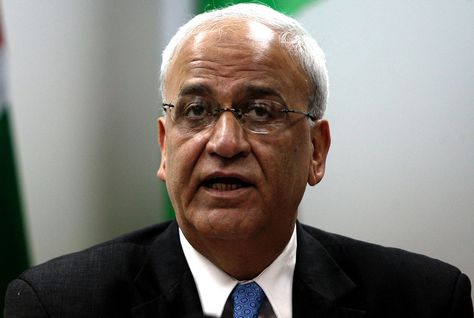
And lets not forget that Hamas is nowhere to be found. Even if a peace plan were formalized, which is impossible, Hamas must be a factor in the plan. By leaving them out it will only fracture the Palestinian people further, while ultimately making the peace process moot. It is good that they are sitting down face to face talking. But until Hamas is allowed into the negotiation process, and the Israelis halt the settlement building, nothing will really happen. In the following days and weeks except a whole lot of diplomatic speak about the “frank” discussions between Israeli envoy Yitzhak Molcho, and Palestinian negotiator Saeb Erekat.
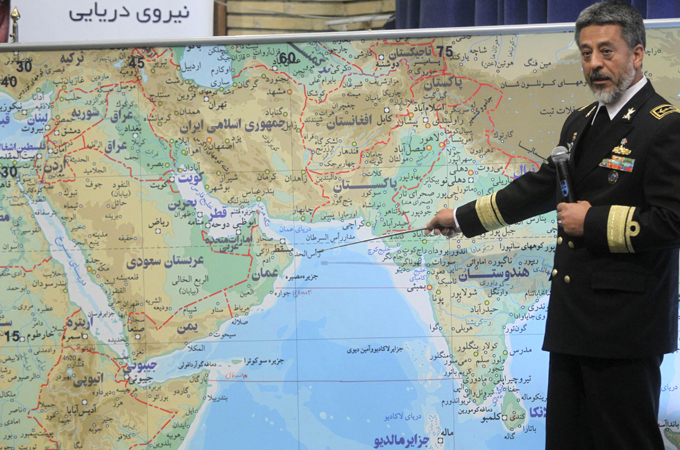
Here we go again. The war of words between the U.S. and Iran just got a bit more heated. Iran has announced that they could block off oil shipments in the Strait of Hormuz if the West applies sanctions to its oil industry. The U.S. shot straight back with this
“Anyone who threatens to disrupt freedom of navigation in an international strait is clearly outside the community of nations: any disruption will not be tolerated,”
“…always ready to counter malevolent actions to ensure freedom of navigation.”
This was a response from US Fifth Fleet spokeswoman Lt Rebecca Rebarich, as quoted in The Guardian. As Dan Murphy of the Christian Science Monitor point out though, closing the Strait is doable but not easy.
All the same this is another ridiculous instance of the total lack of tact and diplomatic nuance from the West, and in particular, the Obama administration. We have got to talk to the Iranians. That is the one and only way that this crisis will be solved. What did the West expect the Iranians to do? If anyone cut off our ability to make money through trade we would do a whole lot more than just cut off access to a trade shipping route. Ratcheting up tensions is not going to get us anywhere. Instead it makes it impossible politically for either side to do anything. The regime in Iran can not back down now to the west now. It would spell disaster and collapse of their hold on power. And if Obama looks even the slightest bit soft of the Islamic Republic he will have to deal with being an appeaser to “terrorists”. So again we are all back to square one with how to deal with the issue of Iran’s nuclear program. And all of this could have been avoided if the West were willing to engage the Iranians, rather than treat them like children.
In the seemingly unending cycle, Israel has announced that it will build 130 new settlements in East Jerusalem. This comes off the heels of increasing hostility between Israel and those in the Occupied territories, and Gaza. Today a former Islamic Jihad fighter was killed in a refugee camp in Gaza. With in the Jewish state the political environment is also becoming increasingly volatile. A growing divide is forming between the ultra orthodox and settler community and the rest of Israel. As described in a recent Foreign Policy article a state within a state is forming in the settler camps popping up all around the West Bank. And just yesterday hundreds gathered in Israel to protest against the harsh treatment of women by those in the ultra orthodox community.
These settlements are a carrot for the radical settler community. In order to keep them quiet and subservient to the right wing government in power, more and more settlements are constructed. Every time the settlers burn a mosque or spit on 8 year old girls for dressing immodestly, they are eventually rewarded with more settlements in East Jerusalem, or more autonomy in the West Bank. Netanyahu is also doing this to make a point to the Palestinians that 2012 is not going to be any different from the previous years; if anything it will be a lot more dangerous and hostile. Israel is close to the brink of very serious problems if this trajectory is continued. Netanyahu clearly has no desire to broker any sort of peace between Israel and the Palestinian people. Instead he prefers to stay the course and heighten tensions with those living in the West Bank and Gaza. And with Fatah and Hamas working hard to broker some sort of unity government deal, Netanyahu is really being pushed into a corner. While another intifada might be to pessimistic, it will be very difficult for Israel to continue on this path in the foreseeable future. The Middle East is changing, albeit slowly, and Israel needs to catch up. They will no longer be top dog in the region, able to do and say whatever pleases them. If Israel wants to continue to be a thriving and stable country, serious change need to take place internally, especially within the political class. Otherwise 2012 is going to be a very bloody year for Palestinians, Israelis, and the Arab world.
Rumors are abound as to who is responsible for carrying out a deadly attack in the Syrian capital of Damascus on Friday. In the past the regime has blamed attacks almost exclusively on the opposition; in this case they have blamed Al Qaeda. The opposition has vehemently denied that it has had any involvement in this. The leader of the Free Syrian Army has admitted to attacking an intelligence building in a suburb of Damascus, but denies carrying out this attack. The opposition, and many others, see the government blaming Al Qaeda as a tactic to legitimize their control of the country. They are hoping that this will endear them to the international community. If it is Al Qaeda, which has not claimed responsibility, it would mark one of their most sophisticated attacks to date. If true, they were able to get into a highly secure area of the capital just as observers from the Arab League arrived. The truth of this might be even more disturbing. Many in Syria believe that it was Assad and the regime that carried out this attack. Ben Ali was said to have been contemplating a bombing in the final days of his reign in order to show the world that he needed to be in power. It really is not beyond the pale to imagine that Assad could order a bombing like the one on Friday. Hafez al Assad, Bashar al Assad’s father, used fighter jets to carpet bomb 10,000 people in Homs in the 1980’s to suppress mass protests. The regime is still under the impression that brute force will stop the protesters. In spite of the bombing huge crowds filled the streets through out the country. In Damascus their were huge pro-regime crowds chanting “Death to America”. This illustrates how divided the nation is between pro and anti regime elements. It may be time to admit that the civil war everyone has been predicting will happen has already happened.
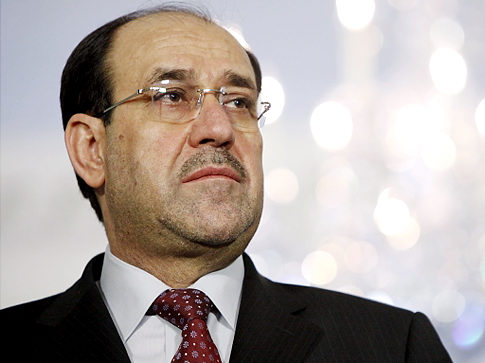
Waiting until the last U.S. troops had crossed the border into Kuwait, Prime Minister Nouri al Maliki issued an arrest warrant for the Vice President Tariq al-Hashimi. Hashimi is alleged to have links to various terror plots, including the recent assassination attempt on PM Maliki. In true Saddam style Maliki broadcasted taped confessions from men who work as security for the Vice President; they confess that they were ordered to carry out attacks on behalf of Hashimi.
This is just the latest in a series of authoritarian measures taken by Prime Minister Maliki in the past few years. The fact that Hashimi is a Sunni has only added fuel to the fire. His al-Iraqiya party has said that it will no longer work with the government. And as of now Mr. Hashimi is still hiding in the autonomous Kurdistan region. Maliki’s attempt to consolidate his reign on power has made the sectarian situation even more dangerous. In a spectacular series of bombings today scores of people were killed.
Unfortunately the situation in Iraq seems destined to follow down this road. The sectarian divide in the country has been on the rise for years now. U.S. troops in Iraq would not have made a difference; which will be the refrain that we will here from those on the right in the coming days. This sort of violence and political power grabbing was set in motion after Maliki and L. Paul Bremer instituted the de-Baathification of the country in the early stages of the war. Maliki has marginalized Sunnis for a while now. Conversely, elements such as Al Qaeda have manipulated the situation to inspire violence against Shia in Iraq. With out U.S. forces Maliki has only himself to blame for what happens in Iraq. If he continues on this trajectory, Iraq may enter into a real and bloody civil war. Thank god Maliki and the army is up to the task.
This is the most ludicrous claim floating amongst liberal circles right now. Don’t for a second think that president Obama’s decision to leave Iraq wasn’t political. Yes, president Bush had set a time table in motion that would have seen troops exiting Iraq now, but this is an election year folks, and the president wants to be able to say that he brought the troops home during the 2012 campaign. It’s no an evil conspiracy it’s just politics. That is how the game is played. We unfortunately don’t live in an altruistic world were we do things for the benefit of others. Politicians do things to benefit themselves and their grasp on power. This also extends to democratic leaders in the west who claim to be defenders of freedom and human rights.











 Porkins Policy Review