This week I am joined by Robbie Martin and Pearse Redmond to review and analyse the low budget conspiracy thriller Operation Terror. We analyse the plot – where a member of the Council on Foreign Relations recruits a CIA officer to prepare and carry out the 9/11 attacks – and why this is unrealistic. We note several examples of how the film incorporates elements from all over 9/11 conspiracy lore, but especially from Pilots for 9/11 Truth, one of the more wacky parts of the ‘truth’ movement. We ask whether the film is fan service for 9/11 truthers, and conclude that it reflects and represents a lot of the real characteristics of the 9/11 movement. This is a lengthy and very funny discussion that you won’t want to miss.
I joined good friend Ed Opperman to discuss some of the latest so called revelations regarding Jeffrey Epstein and his sexual trafficking enterprise. I talk about the numerous armchair investigators that continually repackage old material as breaking news when it comes to this case. I go into detail about Claude Taylor, a low level Clinton administration employee, and his claims about both Trump and Epstein. Ed and I talk about the problems with Taylor’s story and his bizarre background. I also touch on his relationship with Louise Mensch and Taylor’s claims of having a source within Eric Schneiderman’s office. Later I talk about the media cycle of a Jeffrey Epstein story and offer my theory and analysis as to how and why they happen the way they do. I also talk about the rehabilitation of Alan Dershowitz and his meeting in Mar A Lago with Trump shortly after coming into office.
In the second hour Ed and expand the conversation and talk about the political crisis in Turkey, , Jared Kushner and his shady dealings with Qatar, how Trump destroyed the USFL, and the dynastic ambitions of the Trump and Kushner family. Ed and I end by touching on the recent ban on Trans soldiers and how the Pentagon is responding to it.
Tom Secker and Matthew Alford join me today to discuss their brand new book National Security Cinema: The Shocking New Evidence of Government Control in Hollywood. We begin by talking about the overall structure of the book and why Tom and Matt decided to write it. Matt and Tom talk about how this book is different from other scholarly books on the topic of government influence in Hollywood and entertainment at large. Tom and Matt talk about the wealth of new research that they discovered which shows that this influence has only increased over time. The three of us examine DOD entertainment liaison head, Phil Strubb, and critique his claim that he only plays a minor role in Hollywood. We look at films such Contact, who in exchange for a few military trucks altered every subversive comment on the military, or simply wrote them out of entire scenes. We talk about how powerful a tool this is not just in presenting a particular image, but in ensuring that a particular image is never know to the viewing public. We discuss how the Pentagon continually wants a benevolent representation of themselves even though they continually boast to the media that they are the most destructive force on the planet. We also talk about the Terminator franchise which manages to instill the message that nuclear war isn’t so bad and that the military will always be there to help afterwards.
In the second hour we continue looking at several other cases studies including Hotel Rwanda, Rules of Engagement, and Thirteen Days. In the case of Hotel Rwanda Matt explains how this movie followed all of the US State Department’s talking points about the 1994 Rwandan genocide with no direct influence from the government. Tom breaks down the numerous changes to the structure on Rules of Engagement which would eventually result in arguably the most racist American film about an Arab nation to date. We also focus on the corporatization of the film industry in tandem with the national security state. The three of us rant about the blatant use of product placement in films today and how this is another piece of national security cinema. We end on a slightly positive note by talking about what can be done to combat this pervasive and dangerous problem. Tom and Matt also give some examples from the book of filmmakers which have actively fought against the national security states influence in cinema.
Tom Secker and I were recently guests on Len Osanic’s Black Op Radio. We discussed The CIA and Hollywood series and specifically our episode on The Quiet American and Edward Lansdale. We discuss the theory that Lansdale was acting as a former ad-executive and was attempting to sell war in South East Asia. Tom and I also talk about the CIA’s use of George Orwell as propaganda, Charlie Wilson, and why government interference in cinema and culture is so dangerous.
Writer and comic book reviewer Ryan Carey joins me for an in depth discussion of the comic industry and its relationship with the CIA. We begin by looking at the early days of comic books and their first forays into politics during WWII. Ryan talks about the overt left leaning politics of the original Superman comics and how this evolved into a nationalistic pro-US series during WWII. Next we move onto ex-CIA agent Tom King who’s charmed life has led him to the pinnacle of comics, writing the latest Batman comics. Ryan explains how King went from being a clandestine office in Iraq and Afghanistan to moving quickly up the ladder within the industry. We talk about King’s earlier work such as Omega Men and Vision and how shades of his past bled through with the writing. Ryan also talks about The Sheriff of Babylon which is loosely based on his own experiences inside Iraq. Ryan also points out the bizarre circumstances surrounding Kings career and how he continued to move up despite poor comics sales.
Later we discuss the significance and influence that Batman has with the comics industry and why it is so important. Ryan and I talk about why the CIA would gravitate to Batman and seek to influence it and its message. Ryan explains how several of King’s story-lines fit into the narrative the CIA is constantly putting out. We also talk about how the latest Batman comics have Bruce Wayne working indirectly for a shadowy arm of the government. Ryan and I also touch on the fact that CIA asset Ben Affleck is the latest actor to portray Batman and how this couldn’t just be a coincidence.
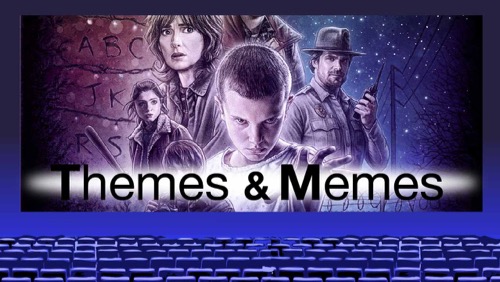
On this episode, we welcome special guest Pearse Redmond from Porkins Policy Review to discuss the new Netflix Original series, Stranger Things.
Comprising one season of eight episodes thus far, the show is one of many recent productions that are made exclusive to on-demand platforms, and has fast become a sentimental sensation among its thirty-something target audience; thanks to its pastiche of 80’s pop culture references and nostalgic plot devices.
We start by establishing the beginnings of the story, where strange events begin to unfold in 1980’s small town America. Set against the backdrop of a secretive Cold War experiment at a local government facility, the series blends real world references to geopolitics and conspiracy culture with a heavy overlay of fantasy, horror, and science fiction – staying true to the aesthetic and screenplay of the classic 80’s sub-genre.
We also explore one of the most interesting aspects of the series, in looking at the target marketing of customised entertainment, where tools like analytics and meta-data seem to be driving the production of on-demand, niche-marketed TV series. Is a merge between Hollywood and Silicon Valley going to be the next big tech revolution?
Finally, we discuss some of the archetypes, roles, and cultural dynamics being presented in the show, and explore the question of how mass culture can influence our perceptions of history, where memories are continuously filtered through an emotional overlay of sentimental entertainment.
For this inaugural episode I am joined by my good friend and frequent collaborator Tom Secker. We begin by discussing the bizarre life and career of the CIA Hollywood liaison Chase Brandon. We then move onto the relationship between entertainment and the security services. We explore the notion that this going beyond mere propaganda, and instead represents a significant distortion of our culture and perception of reality and world events. Tom and I finish off by discussing the recent coup attempt in Turkey and some of our problems with the way the alt-media has covered this event.
Pearse Redmond of Porkins Policy Review joins the show. We discuss his monthly series Porkins Great Game and the series he does with the UK’s Tom Secker CIA and Hollywood. We talk about the CIA’s involvement in the entertainment industry and deleterious effects it has had on society. Later we talk about Pearse’s research into the OJ Simpson murder trial and the several interviews he conducted with journalist Stephen Singular who wrote the book Legacy of Deception: An Investigation of Mark Fuhrman and Racism in the L.A.P.D.
On this episode Christoph and I turn our attention to Kazakhstan and the June 5th mass shooting. We examine the attack itself, breaking down what happened and the governments swift response. We explore the socioeconomic problems facing western Kazakhstan and how this may have played a decisive role is spurring on these attacks. We discuss the recent land protests across the Central Asian nation, and give a historical overview of Aktobe, including the role of western Kazakhstan in propping up the ruling regime.
Next we move on to the recent killing of Taliban leader Mullah Mansoor. Less than a year after his rise to power Mansoor was killed by a US drone strike in yet another blow to the peace process. Christoph and I explain the precedent set by the US in not only targeting the top Taliban leader, but also having the strike take place in the spiritual and operational city of Quetta. We consider Pakistan’s strong condemnation of the US for breaking its commitment to forging a lasting peace between Kabul and the Taliban. We examine Mansoor’s frequent travel to Dubai, Bahrain, and Iran, as well as his Pakistani passport. Christoph explains the reasons behind Mansoor’s frequent travel to Iran. We also touch on the increasing violence in Northern Afghanistan which is slowly getting the attention of the US and Russia.
Lastly, we discuss the recent row between Germany and Turkey over Germany’s parliamentary recognition of the Armenian genocide. We review the litany of harsh remarks from Erdogan and his government against Germany. Christoph gives us his perspective from within Germany as to how this is playing out there. He also discusses the satirical video put out by Jan Bohmermann about Erdogan and how this plays into the tense relationship between Turkey and Germany.
We finish off with our “weird terrorism” segment by looking at several interesting stories: the CIA-Pentagon fight over supporting Al Nusra; the release of Israeli spy Jonathan Pollard, an update on Alparslan Celik.
Christoph and I together announce the start of our Patreon campaign. For anyone interested in supporting the podcast and helping it to expand you can now donate on an episode-by-episode basis through Patreon. To find out more please visit us here.
Jay Dyer joins us for this episode where we analyse the 2009 comedy The Men Who Stare at Goats, loosely based on Jon Ronson’s book of the same name. It tells the story of a journalist who is inducted into the world of psychic soldiers during the Iraq war. The movie goes on to explain some of the history behind the First Earth Battalion, an experimental Pentagon unit devoted to developing a new generation of super soldier informed by the hippy and New Age movements. We examine what the film leaves out, especially in the form of MKULTRA and similar CIA projects and experiments with similar aims, and ask whether the purpose was not to ask ‘How could love and peace help win wars?’ but to weaponise New Age philosophy and the New Age movement.
The Men Who Stare at Goats is the final movie in the George Clooney/Grant Heslov series before they took the full plunge and made Argo with the help of the CIA. We look at whether Goats – Heslov’s directorial debut – was the final step in their long-term overture to the CIA. The fact that Goats reduces the CIA’s involvement in such projects to a single scene, and was distributed by none other than Overture Films are strong hints towards this. We also map out the evidence and implications of state sponsorship of the entire Goats project, from Ronson’s original book and documentary series through to the Hollywood version. The use of technical advisors who were part of these Pentagon units back in the 70s/80s and who were ‘reactivated’ to help fight the War on Terror implies that at least the DOD, if not the CIA, were in favour of this film. We round off by pondering the plausibility of the remote viewing phenomenon.








 Porkins Policy Review